
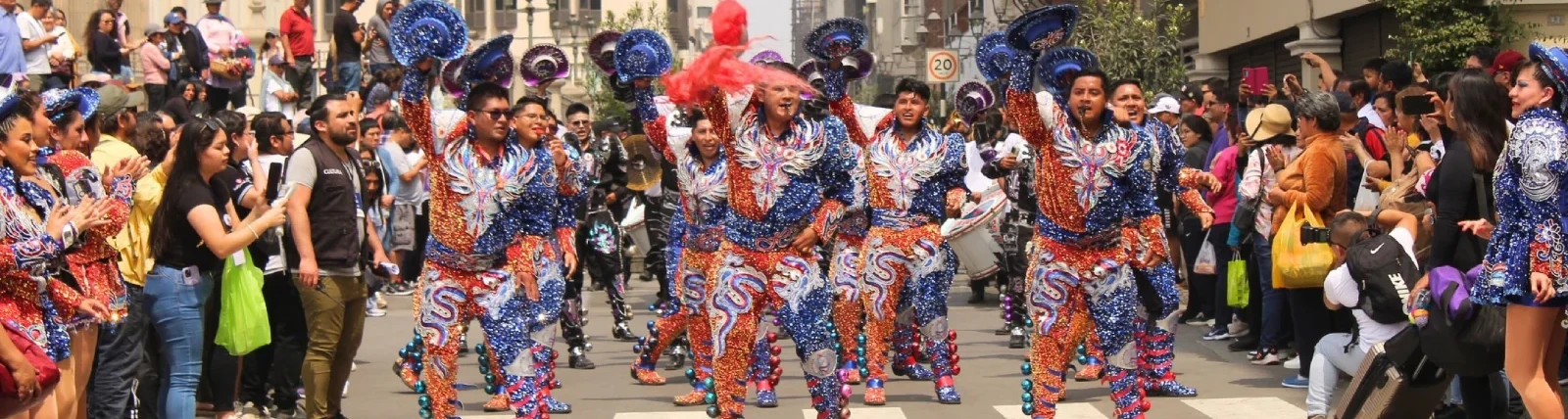
Feast of the Virgin of Candelaria (Virgen de la Candelaria) in Puno & Lake Titicaca
Witness a breathtaking explosion of color, devotion, and Aymara-Quechua mysticism on the shores of Lake Titicaca.
Lake Titicaca—perched at a majestic 3,812 meters (12,507 feet) above sea level in the southern Peruvian Altiplano—is usually defined by its tranquil, mirror-like silence. Yet for two weeks every February, the lakeside capital of Puno transforms into the epicenter of South America's most vibrant religious and folkloric celebration on Peru's cultural calendar: the Feast of the Virgin of Candelaria (Fiesta de la Virgen de la Candelaria).
Inscribed by UNESCO as Intangible Cultural Heritage of Humanity, this monumental festival is a living masterpiece of syncretism—uniting Catholic devotion to the Virgin of Candelaria (affectionately revered as Mamacha Candelaria) with ancestral Quechua and Aymara reverence for Pachamama (Mother Earth).
The Dance of the Demons (La Diablada) & Trajes de Luces
While the festival brings together more than 40,000 dancers and 200 brass and panpipe bands across two weeks—beginning with indigenous Danzas Autóctonas on February 2nd and culminating a week later during the grand Octava—the undisputed icon of Candelaria is La Diablada. This dramatic choreography stages the cosmic struggle between the Archangel Michael and the Seven Deadly Sins led by Lucifer and the China Supay.
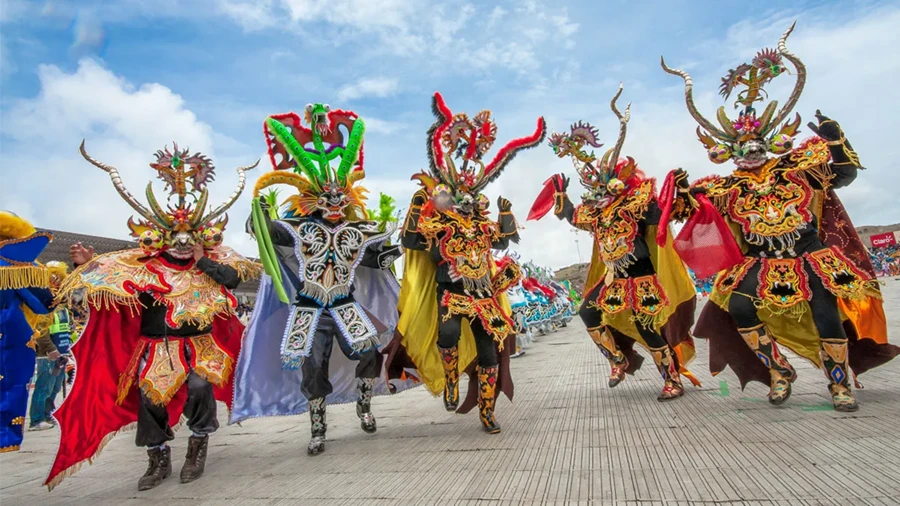 Handcrafted Diablada masks and 'Trajes de Luces' (Suits of Light) can weigh over 30 pounds, adorned with hand-blown glass eyes, sculpted dragons, mirrors, and gold-and-silver bullion embroidery.
Dancers wear elaborate horned masks crowned with sculpted serpents and dragons—symbolizing both biblical demons and El Tío, the pre-Hispanic Andean spirit of the mines. During the Sunday stadium competition and Monday's four-kilometer Parada de Veneración street parade, hundreds of caped dancers leap in unison to the thunderous brass of Altiplano bands.
A Journey of Contrasts: Vibrant Tradition & 5-Star Lake Retreats
For the luxury traveler, experiencing a celebration that draws over 100,000 visitors to Puno requires seamless local orchestration—as well as proper high-altitude acclimatization. We weave Puno and Lake Titicaca into our 12-Day Colca Canyon, Lake Titicaca & Machu Picchu Package:
- Private VIP Viewing & Anthropological Guidance: We secure reserved seating and private colonial balconies along the Parada de Veneración route in Puno, accompanied by a specialist historian who decodes the symbolism of the Diablada, Morenada, and Llamerada troupes.
- Secluded 5-Star Lake Titicaca Lodges: After experiencing the vibrant energy of Puno during the day, our private chauffeurs whisk you away to a tranquil luxury sanctuary on a private peninsula of Lake Titicaca (such as Titilaka Relais & Châteaux Lodge), where you can dine by candlelight overlooking the silent waters and explore the Uros and Taquile islands by private yacht.
- Luxury Rail Connection to Cusco: Pair your February stay at Lake Titicaca with a journey aboard the Belmond Andean Explorer sleeper train or a private overland expedition across the La Raya pass to Cusco and Machu Picchu.
Planning Your February Expedition
Because the Candelaria Festival takes place during the Andean "Emerald Season", the highlands surrounding Lake Titicaca are lush and vibrant. As suites at luxury lakefront lodges and flights into Juliaca (JUL) sell out 6 to 8 months in advance for February, early planning is essential.
Embrace the Magic of Lake Titicaca
Do not merely see Lake Titicaca—feel its living pulse. Let our travel architects integrate the UNESCO Feast of the Virgin of Candelaria into a bespoke luxury itinerary balancing cultural immersion with 5-star lakefront serenity.
Virgen de la Candelaria Festival in Puno FAQ
What are the best dates in February to witness the Virgen de la Candelaria festival in Puno?
The celebration spans the first two weeks of February. February 2 is the central liturgical feast day featuring indigenous 'Danzas Autóctonas,' while the most spectacular weekend occurs seven days later during the 'Octava' (second Sunday and Monday of February), when over 40,000 dancers in jeweled 'Trajes de Luces' (Suits of Light) and Diablada masks perform in the stadium and grand street parade (Parada de Veneración).
What is the meaning of the Diablada (Dance of the Demons) at Candelaria?
The Diablada is a dramatic choreographic battle between the Archangel Michael and the forces of Lucifer (coupled with the pre-Hispanic Andean spirit of the mines and mountains), wearing elaborate horned masks and 30-pound gold-and-silver embroidered capes in devotion to Mamacha Candelaria.
Where can luxury travelers stay near Puno during the Candelaria Festival?
We arrange stays at serene 5-star properties on the shores and private peninsulas of Lake Titicaca—such as Titilaka Relais & Châteaux Lodge or GHL Hotel Lago Titicaca on Esteves Island—allowing you to enjoy VIP daytime access to the Puno parades and return each evening to the quiet tranquility of the lake.