
The Best Time to Visit Peru: A Luxury Traveler's Guide (2026)
Decoding microclimates and seasons across the Andes, Amazon, and Pacific Coast to plan your flawless luxury expedition.
Peru is a land of dramatic geographical extremes. Within a single 10-day itinerary, you can easily traverse arid coastal deserts, ascend to the soaring peaks of the Andes, and descend into the humid depths of the Amazon Basin. Because of this extraordinary diversity, there is no single "uniform" weather window for the entire country. Instead, the best time to visit Peru depends on which regions you plan to explore.
For the majority of luxury travelers, the primary goal is experiencing Imperial Cusco, the Sacred Valley, and the architectural masterpiece of Machu Picchu in uncompromising comfort. To help you plan your bespoke Peru itinerary, our concierges have broken down Peru's three distinct climatic regions below.
1. The Andean Highlands (Cusco, Sacred Valley, Machu Picchu & Lake Titicaca)
The Andes dictate the travel calendar in Peru. Rather than the four traditional seasons of the Northern Hemisphere, the highlands experience two distinct periods: the Dry Season and the Emerald (Green) Season.
The Dry Season: May to October (Peak Andean Season)
This is the most popular and reliable season to visit Machu Picchu, Cusco, Arequipa, and Lake Titicaca. During these months, the skies over the Sacred Valley and Cusco are typically a brilliant, cloudless azure.
- Weather: Expect bright, sunny days with comfortable daytime temperatures (18°C–22°C / 65°F–72°F). Due to the altitude, temperatures drop briskly after sunset, approaching freezing in June and July in Cusco and Puno.
- Pros: Ideal conditions for photography, unobstructed views of the Machu Picchu citadel, and dry hiking trails for Rainbow Mountain, Humantay Lagoon, and the Classic Inca Trail.
- Cons: Higher visitor numbers in June, July, and August. Securing VIP seats aboard the Belmond Hiram Bingham train, 5-star suites, and prime Circuit 2 permits requires booking 3 to 6 months in advance (read our Machu Picchu Crowd & Timing Guide).
The Emerald Season: November to April
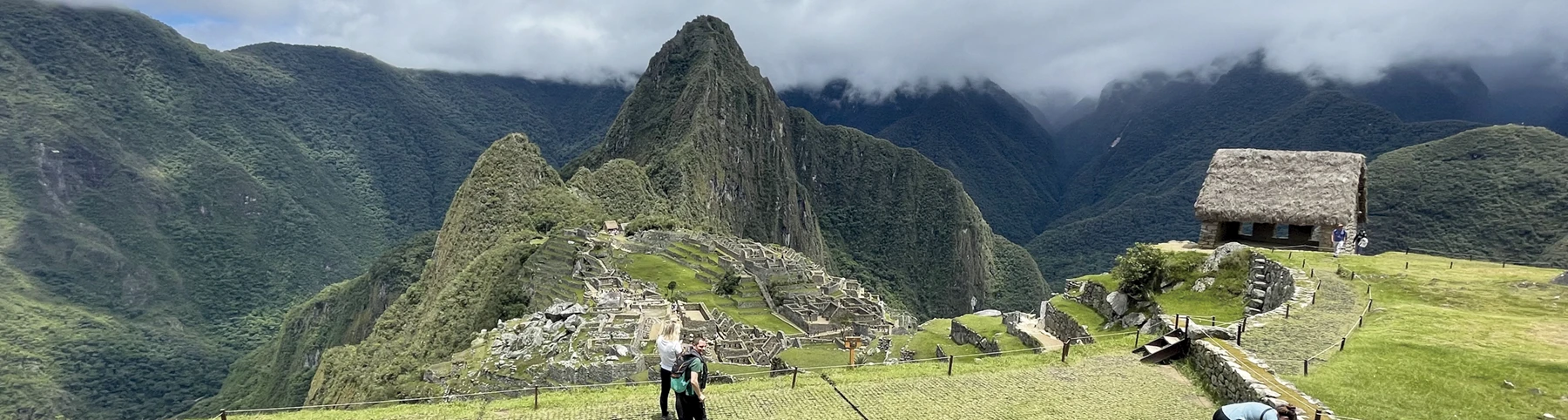
Often referred to as the rainy season, we prefer the term "Emerald Season." Afternoon showers transform the Sacred Valley and the cloud forest around Machu Picchu into a lush paradise teeming with wild orchids.
- Weather: Daytime temperatures are milder and nights are warmer than in July. Mornings are frequently clear, with brief afternoon showers. January and February are the wettest months (note: the Inca Trail closes every February for annual maintenance, though Machu Picchu itself remains open daily by train).
- Pros: Vibrant green landscapes, fewer visitors at archaeological sites, and a tranquil atmosphere at Sacred Valley luxury resorts.
- Cons: Higher likelihood of morning mist veiling the peaks around Machu Picchu.
2. The Desert Coast (Lima, Paracas, Ica & Nazca)
Peru's Pacific coastline is shaped by the cool Humboldt Current, creating a coastal desert that almost never experiences heavy rainfall.
The Sunny Coastal Summer: December to April
While the Andes experience their green season, the coast enjoys its sunny summer. Lima sheds its coastal mist to reveal warm blue skies and golden Pacific sunsets—making it a wonderful time for oceanfront dining in Miraflores and Barranco, yacht excursions to the Palomino or Ballestas Islands, and panoramic flights over the Nazca Lines.
The "Garúa" Winter in Lima vs. Year-Round Sun in Paracas & Ica: May to November
During the Andean dry season, Lima experiences garúa—a temperate coastal sea mist. However, just 3.5 hours south in Paracas, Ica, and the Huacachina Oasis, the desert microclimate remains sunny and warm year-round.
3. The Amazon Rainforest (Tambopata & Amazon River)
The Peruvian Amazon is warm and biodiverse 365 days a year, with two subtle seasonal shifts:
- Dryer Season (May – October): Less rainfall, firmer forest trails in Tambopata, and peak macaw activity at river clay licks—making it ideal to combine with Cusco and Machu Picchu (see our guide on combining the Amazon & Andes in luxury).
- Wetter / High-Water Season (November – April): Higher water levels allow skiffs to glide closer to the upper rainforest canopy.
The Verdict: The "Golden Window"
If you wish to combine the coast, the Andes, and the Amazon rainforest with the highest probability of pleasant weather and fewer crowds across all three regions, April, May, September, and October are the golden months.
Ready to Choose Your Dates?
Our travel architects specialize in timing your itinerary down to the hour—ensuring you secure the finest 5-star suites and the quietest Machu Picchu entry circuits.
Peru Weather & Seasons FAQ
What are the best overall months to visit Peru?
May, September, and October are the golden shoulder months to visit Peru. During these periods, the Andes enjoy clear, sunny skies with fewer visitors at Machu Picchu, the Amazon rainforest experiences pleasant trail conditions, and the southern desert coast in Paracas and Ica remains sunny.
Is Machu Picchu open during the rainy season (January and February)?
Yes, the Machu Picchu citadel and the luxury train routes from Cusco and the Sacred Valley remain open 365 days a year. Only the Classic 4-Day and 2-Day Inca Trail hiking routes close during the month of February for annual conservation and trail maintenance.
Does Lima's coastal winter fog ('garúa') affect Paracas, Ica, and the Nazca Lines?
No. While Lima experiences overcast skies from May to November, the desert valleys of Paracas, Ica, Huacachina, and Nazca sit just 3.5 to 4.5 hours south in a sunny microclimate that enjoys over 320 days of sunshine per year.