
Holy Week in Cusco: The Lord of the Earthquakes & Semana Santa Guide
Discover the awe-inspiring Holy Monday procession of the Black Christ and the profound fusion of Incan and Catholic devotion.
While the rest of the Catholic world considers Good Friday or Easter Sunday the zenith of Holy Week, Imperial Cusco follows a different, ancient rhythm. Here, the spiritual climax of Semana Santa occurs on Holy Monday (Lunes Santo).
To experience Easter in Cusco—one of the most moving celebrations on Peru's cultural calendar—is to witness the ultimate expression of Andean syncretism, where the solemnity of Spanish Catholicism is interwoven with pre-Hispanic Incan traditions.
El Señor de los Temblores (The Lord of the Earthquakes)
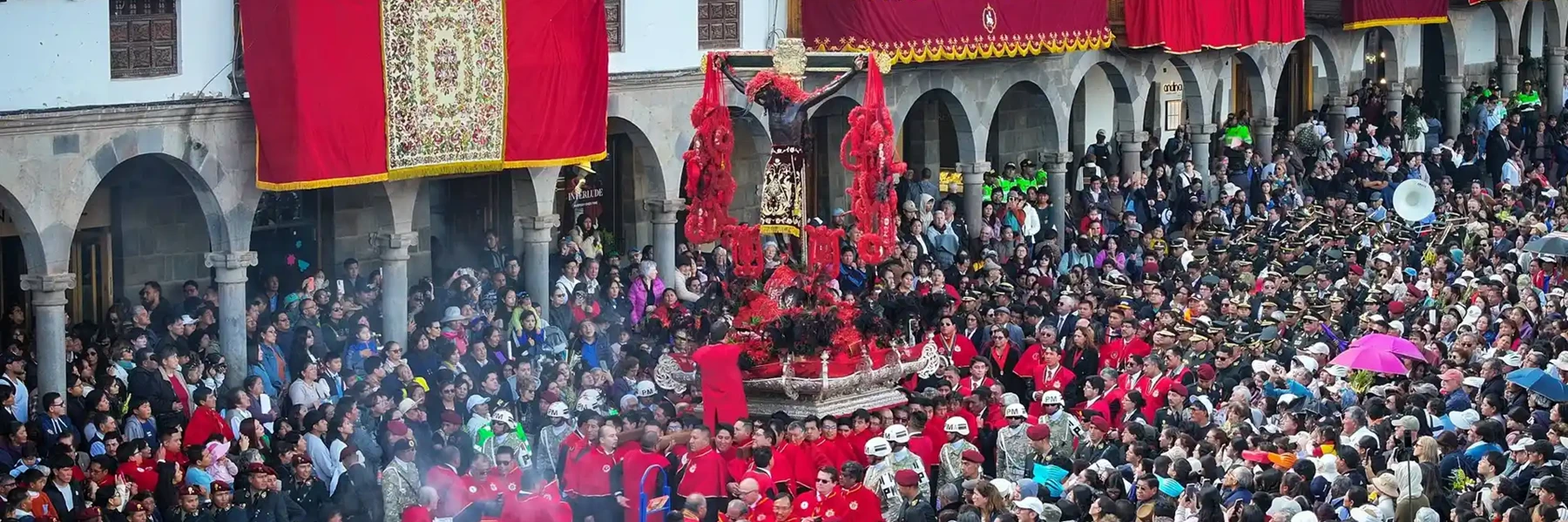
The sworn patron of Cusco is a striking, dark-complexioned 16th-century crucified Christ known as El Señor de los Temblores (or Taytacha Temblores in Quechua), housed inside the Cusco Cathedral (visited on our Imperial Cusco City Tour). Historical chronicles recount that during the devastating earthquake of March 31, 1650, residents carried the effigy out into the Plaza de Armas, where the tremors miraculously ceased.
The sculpture's rich bronze-ebony patina was formed over centuries of exposure to candle smoke, incense, and the natural oils of sacred flowers. On Holy Monday afternoon, the effigy is borne through the cobblestone streets on a hammered silver litter as devotees shower the Christ from colonial balconies with crimson Ñucchu wildflowers (Salvia oppositiflora)—an Andean flower that symbolizes the blood of Christ while preserving its ancient role as an Incan offering to the mountain gods.
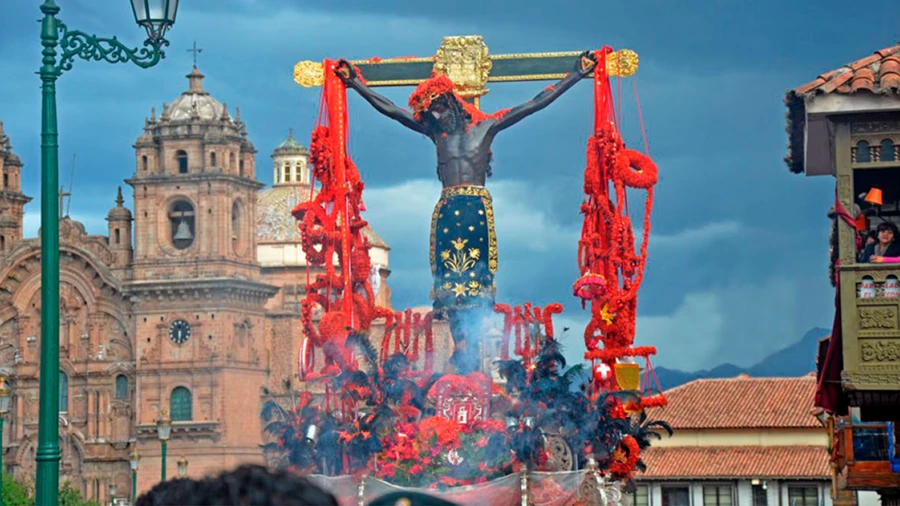 Devotion during Cusco's Holy Week is deeply moving. The Cathedral and surrounding viceregal churches become sanctuaries of candlelight, Quechua hymns, and reflection.
The Culinary Tradition of the "12 Dishes" (Doce Platos)
On Holy Thursday, the focus shifts to the dining table. Commemorating the Twelve Apostles at the Last Supper, Cusqueño families and chefs prepare the "12 Platos" (12 Dishes)—six savory courses and six traditional desserts enjoyed at midday.
Abstaining from red meat, the menu celebrates Andean biodiversity: creamy corn Lawa soup, shrimp chupe, fresh river trout, quinoa, and kapchi of fava beans and mushrooms, followed by sweet artisanal empanadas, baked apples, and stewed peaches (guisado de durazno). As part of our curated gastronomy experiences, we arrange private chef's table tastings of the 12 Dishes paired with South American wines.
Curating a VIP Holy Week Experience
During Holy Monday evening, the Plaza de Armas fills with over 80,000 devotees awaiting the final blessing. At Luxury Machu Picchu, we orchestrate Holy Week as part of our 7-Day Incan Empire Package and custom itineraries so you experience every moment in serenity and comfort:
- Private Plaza de Armas Balconies: We reserve private second-floor colonial balconies overlooking the main square. From this elevated sanctuary, witness the emotional climax at dusk when the Lord of the Earthquakes blesses the city, accompanied by champagne and gourmet hors d'oeuvres.
- Private Cusco School Art & Cathedral Tour: Prior to Holy Monday, our art historians guide you through the Cusco Cathedral to examine the famous Last Supper painting by indigenous master Marcos Zapata—complete with roasted guinea pig and local chicha on Christ's table.
- Sacred Valley Easter Retreats: Pair the spiritual energy of Cusco with a tranquil retreat at our 5-star Sacred Valley luxury resorts in Urubamba before boarding your luxury train to Machu Picchu.
Witness the Imperial Easter
Holy Week transforms Cusco into a living masterpiece of faith, art, and gastronomy. Because private balconies overlooking the Plaza de Armas and 5-star suites sell out months in advance for March/April, contact our travel architects early to secure your itinerary.
Holy Week (Semana Santa) in Cusco FAQ
Why is Holy Monday (Lunes Santo) the most important day of Holy Week in Cusco?
On Holy Monday afternoon, Cusco's revered patron effigy—El Señor de los Temblores (The Lord of the Earthquakes, or Taytacha Temblores)—emerges from the Cusco Cathedral for its annual procession across the historic center, culminating at dusk when the image blesses over 80,000 devotees gathered in the Plaza de Armas.
What is the significance of the red Ñucchu flowers thrown during the procession?
The crimson wildflower known as Ñucchu (Salvia oppositiflora) grows high in the Andes and was sacred to the ancient Incas as an offering to Kon and Viracocha. During Holy Monday, devotees shower the Lord of the Earthquakes with crimson Ñucchu petals to symbolize both the blood of Christ and ancestral Andean reverence.
What is the '12 Dishes' (Doce Platos) tradition on Holy Thursday in Cusco?
Commemorating the Twelve Apostles at the Last Supper, Cusqueño families and top restaurants serve six savory dishes (including corn Lawa soup, quinoa, shrimp or river trout, and humitas) and six sweet dishes (such as artisanal empanadas, guisado de durazno, and mazamorra) at midday on Holy Thursday.