
Corpus Christi in Cusco: The Gathering of the 15 Saints (June Guide)
Witness fifteen richly adorned saints paraded through the Imperial City in a masterclass of Andean and Catholic fusion.
In Imperial Cusco, the celebration of Corpus Christi is unlike anywhere else on earth. When the Spanish arrived in the 16th century, they were astonished to witness the Incas parading the revered mummies (mallkis) of their former emperors around the main plaza in a grand festival of ancestral reverence and feasting.
To replace this pre-Hispanic tradition, colonial authorities substituted the royal mummies with statues of Catholic saints and virgins. Yet the Andean spirit never vanished—it adapted. Today, Corpus Christi is one of the highlights of Peru's cultural calendar, where viceregal artistry is celebrated with unmistakably indigenous music, pageantry, and devotion.
The Gathering of the 15 Saints ("La Entrada")
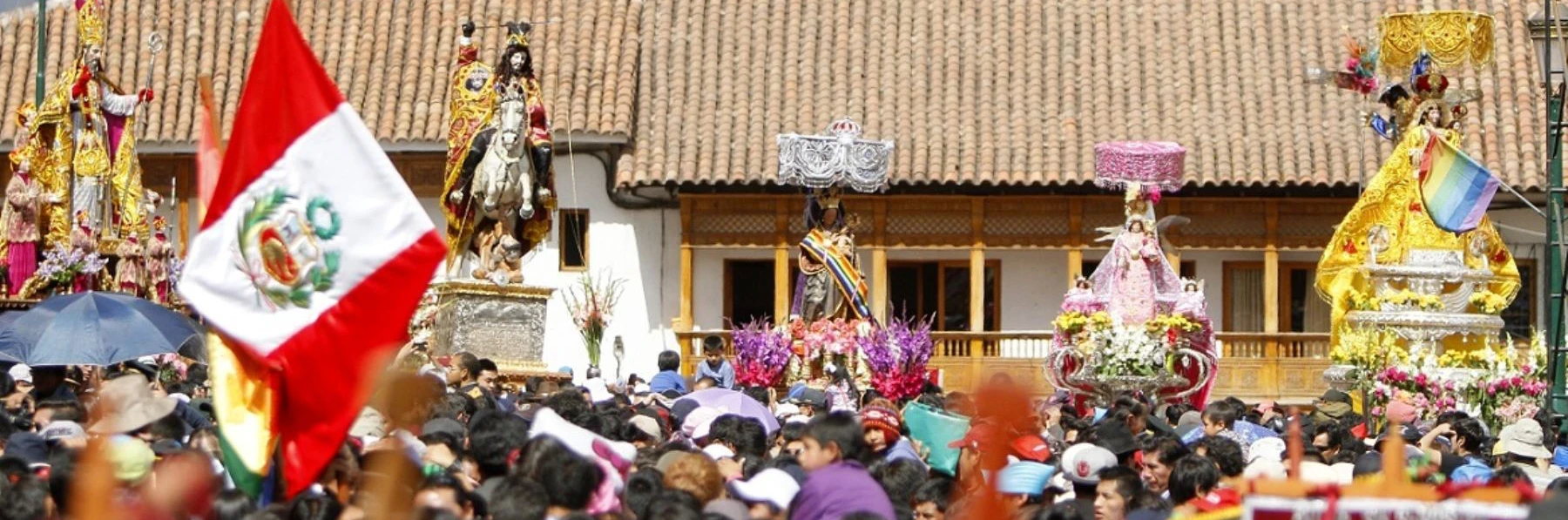
The heart of the festival centers on 15 life-sized statues of patron saints and virgins from historic parishes across Cusco (including San Antonio, San Jerónimo, San Sebastián, Santa Bárbara, and the Virgen de Belén). On the Wednesday before Corpus Christi Thursday, these heavy cedar figures—adorned in velvet robes embroidered with gold thread, silver crowns, and jewels—are carried on the shoulders of devotees to the Cusco Cathedral (explored on our Private Cusco City Tour).
During this ceremonial Entrada, the saints "greet" and bow to one another in intricate choreographies accompanied by brass bands (Qcapaq Qolla and Ch'unchu dancers) before entering the Cathedral, where they remain in symbolic council for eight days until the farewell procession known as La Octava.
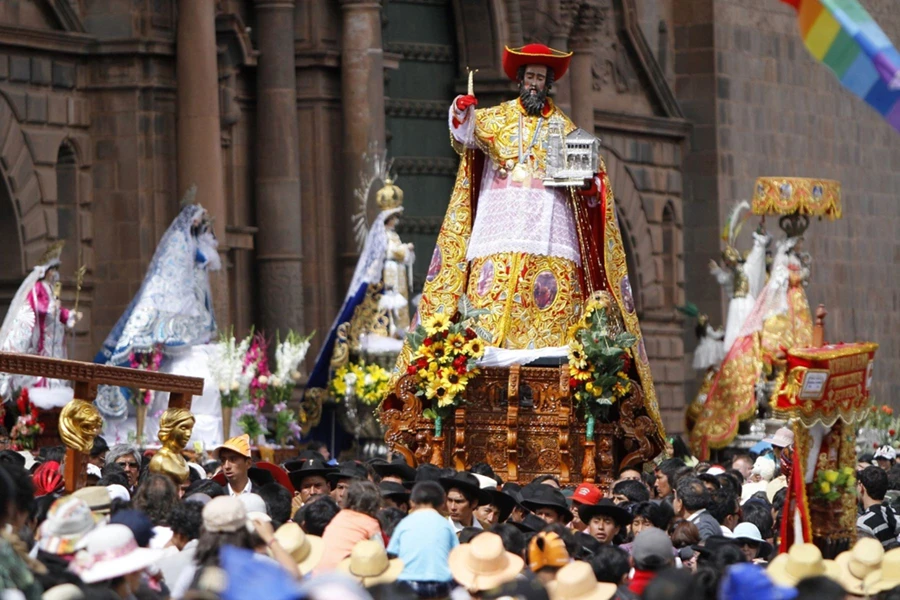 The massive litters, clad in hammered silver, require dozens of bearers. Each parish takes immense pride in dressing its patron saint in bespoke embroidered vestments for the procession.
The Epicurean Tradition: Chiriuchu
For gastronomy enthusiasts, Corpus Christi is synonymous with Chiriuchu (meaning "cold chili" in Quechua). Consumed during the June festivities in Cusco, this ceremonial dish historically symbolized the union of the four regions (Tawantinsuyo) of the Inca Empire.
Served at room temperature, traditional Chiriuchu brings together ingredients from the Pacific coast, the high Andes, and the cloud forest: oven-roasted guinea pig (cuy), free-range chicken, chalona (sun-cured Andean lamb), toasted white corn, Andean queso, cochayuyo (Pacific seaweed), fish roe, morcella, and a fluffy corn tortilla crowned with rocoto pepper. Alongside our Andean Master Cooking Class in Cusco, we arrange private chef-led Chiriuchu tastings for our guests.
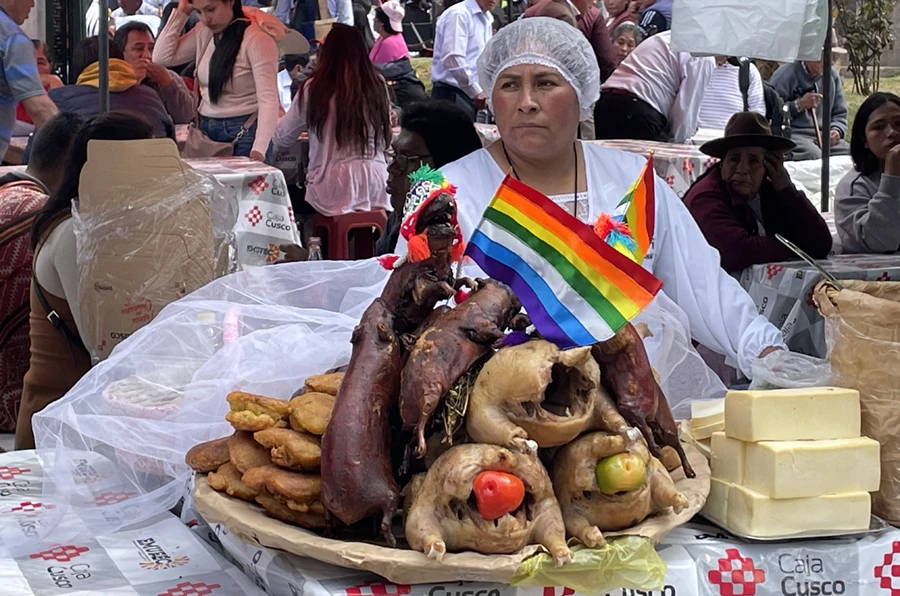 A refined presentation of Chiriuchu—an ancestral culinary mosaic uniting ingredients from Peru's coast, highlands, and valleys in a single ceremonial dish.
Curating Your VIP Corpus Christi Experience
During Corpus Christi, Cusco's Plaza de Armas fills with thousands of spectators, musicians, and folkloric troupes. At Luxury Machu Picchu, we transform this vibrant celebration into an intimate, privileged experience as part of our 7-Day Incan Empire Package:
- Exclusive Colonial Balcony Viewing: We reserve private second-floor colonial balconies overlooking the Plaza de Armas, allowing you to photograph the procession of the 15 saints from above with champagne and gourmet hors d'oeuvres.
- Private Historian & Cathedral Access: Accompanied by an art historian specializing in the Cusco School (Escuela Cusqueña), you will explore the Cathedral during the week of the festival to admire the 15 saints up close and decode the Incan symbols hidden in their silver litters.
- June Jubilee Combination: Because Corpus Christi takes place in June just weeks before Inti Raymi (Festival of the Sun), we secure priority suites at flagship properties like Belmond Hotel Monasterio, Belmond Palacio Nazarenas, and Inkaterra La Casona.
Experience Cusco's Imperial Pageantry
Witness the intersection of Incan heritage, viceregal art, and Andean gastronomy. Speak with our travel architects to incorporate Corpus Christi into your bespoke June itinerary.
Corpus Christi in Cusco FAQ
When is Corpus Christi celebrated in Cusco?
Corpus Christi is a movable feast celebrated on the Thursday 60 days after Easter Sunday (typically falling in late May or June). The grand 'Entrada de Santos' takes place on the Wednesday before, the main procession circles the Plaza de Armas on Thursday, and the 'Octava' farewell procession occurs one week later.
What is the Incan origin behind Corpus Christi in Cusco?
Before the Spanish arrival, the Incas paraded the sacred mummies (mallkis) of their royal emperors around Cusco's main plaza during the solstice season. In the 16th century, colonial authorities replaced the royal mummies with 15 statues of Catholic saints and virgins, creating a unique blend of Andean and Catholic devotion.
What is Chiriuchu and why is it eaten during Corpus Christi?
Chiriuchu (meaning 'cold chili' in Quechua) is Cusco's signature ceremonial dish served during Corpus Christi. It unites ingredients from the coast, highlands, and jungle—including roasted guinea pig (cuy), chicken, chalona (cured lamb), Andean cheese, toasted corn, cochayuyo seaweed, fish roe, and corn tortilla.