
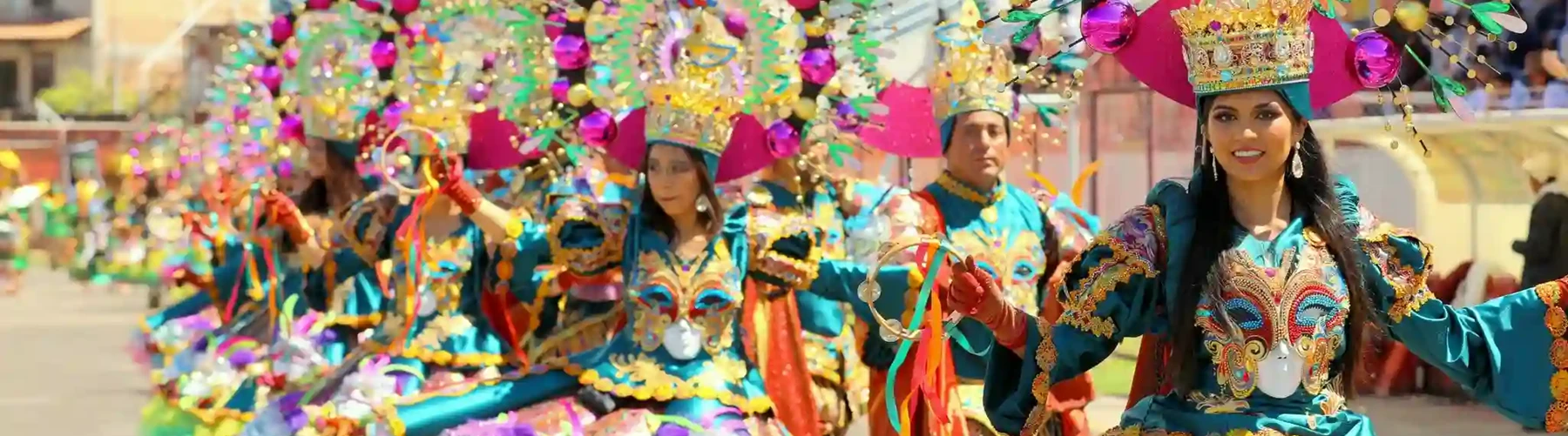
The Cajamarca Carnival: Peru's Capital of Carnival (February Guide)
Discover the unchained joy, vibrant colors, and ancestral melodies of Cajamarca in Peru's northern Andes.
Before the solemnity of Lent descends upon the Andes, the Peruvian highlands erupt into an exuberant celebration of life. While carnivals are celebrated across the country, the undisputed crown jewel of the season on Peru's cultural calendar is the Carnaval de Cajamarca. Set in a verdant valley of the northern Andes (a direct 75-minute flight from Lima), Cajamarca officially holds the title of "Capital of the Peruvian Carnival."
For the discerning traveler seeking authentic cultural immersion, the Cajamarca Carnival offers a joyous window into northern highland heritage—where colonial plazas come alive with silk-and-sequin costumes, poetic guitars, and Private Balcony hospitality.
The Reign of Ño Carnavalón & The Patrullas
The five central days of the festival begin on Saturday with the triumphant entry of Ño Carnavalón (the Andean King Momo). His arrival inaugurates a friendly rivalry among Cajamarca's historic neighborhoods (such as San Sebastián, Cumbemayo, San Pedro, and San José), which spend the entire year hand-crafting monumental feathered and mirrored costumes known as Patrullas and Comparsas.
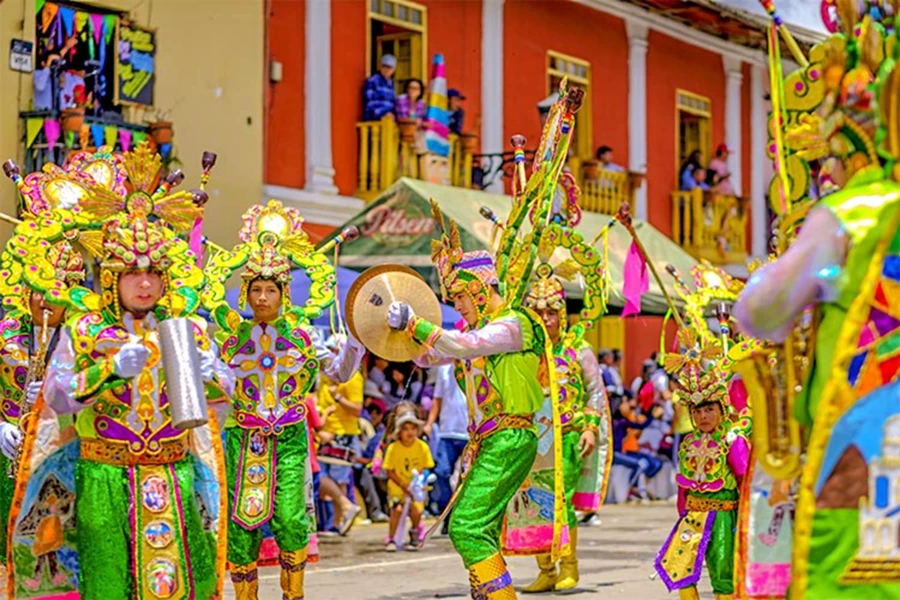 Neighborhood Comparsas and Virreyes parade through historic Cajamarca during Sunday's costume contest and Monday's Grand Corso.
The Art of the Copla & The Unsha
Beyond the visual splendor of the parades, the soul of the Cajamarca Carnival lives in its music. The Coplas del Carnaval—declared Cultural Heritage of the Nation—are witty, rhyming four-line verses sung to the accompaniment of guitars, mandolins, and accordions. Simultaneously satirical, picaresque, and romantic, these verses celebrate life and courtship over glasses of artisanal chicha de jora and frutillada.
On Carnival Tuesday, neighborhoods gather around the Unsha (also known as Yunza or Cortamonte)—a tall cypress or capulí tree adorned with gifts, textiles, and fruits around which couples dance in concentric circles.
Curating the Carnival: A Luxury Perspective
Because street-level celebrations in Cajamarca famously involve water, streamers, and colored powder, attending independently can be overwhelming. At Luxury Machu Picchu, we curate Cajamarca so you enjoy every moment of the spectacle in elevated comfort before continuing to Cusco and Machu Picchu on a bespoke Peru itinerary:
- Private Colonial Balconies for the Grand Corso: We reserve private second-floor balconies and VIP palcos overlooking the Plaza de Armas and the Monday Grand Corso route, allowing you to photograph the Patrullas and floats from above with gourmet catering and fine wines.
- Countryside Hacienda Retreats: Stay in tranquil historic haciendas and boutique hotels in the green Cajamarca countryside, insulated from the downtown festivities when you wish to rest.
- Thermal Wellness at Baños del Inca: Just 15 minutes outside the city lie the natural volcanic hot springs of Baños del Inca—the exact thermal baths where the Inca Emperor Atahualpa rested in 1532, offering a restorative Andean thermal wellness experience.
Beyond the Festival: Cumbemayo & The Ransom Room
Your private historian guide will also lead you beyond the carnival to explore Cajamarca's monumental history: the 3,000-year-old pre-Inca hydraulic aqueducts and stone forest (Frailones) of Cumbemayo, the funerary windows of Ventanillas de Otuzco, and the historic Ransom Room (Cuarto del Rescate)—the only standing Incan building in Cajamarca, which Emperor Atahualpa famously filled once with gold and twice with silver.
Embrace the Joy of the Northern Andes
Experience the most exuberant celebration in the northern highlands with private balcony access and boutique countryside lodging. Contact our travel architects early to plan your February Cajamarca escape.
Cajamarca Carnival FAQ
What are the main days of the Cajamarca Carnival?
The principal celebrations span five days immediately preceding Ash Wednesday (typically in February): Saturday marks the triumphant entry of Ño Carnavalón; Sunday features the vibrant Patrullas and Comparsas costume competition; Monday is the flagship Grand Corso parade; Tuesday is the Unsha (Yunza) tree-cutting celebration; and Wednesday concludes with the satirical burial of Ño Carnavalón at Baños del Inca.
How do you get to Cajamarca and what is the altitude?
Cajamarca is reached via a direct 1-hour and 15-minute flight north from Lima to Mayor General FAP Armando Revoredo Iglesias Airport (CJA). Perched at a comfortable 2,750 meters (9,022 feet) above sea level, it offers mild highland weather and effortless acclimatization.
How can luxury travelers enjoy the Cajamarca Carnival without getting caught in the street water and paint?
We secure private second-floor colonial balconies and VIP boxes overlooking the Plaza de Armas and the Grand Corso route so you can photograph the Patrullas and Comparsas in complete comfort, paired with stays at countryside boutique hotels near the thermal mineral springs of Baños del Inca.